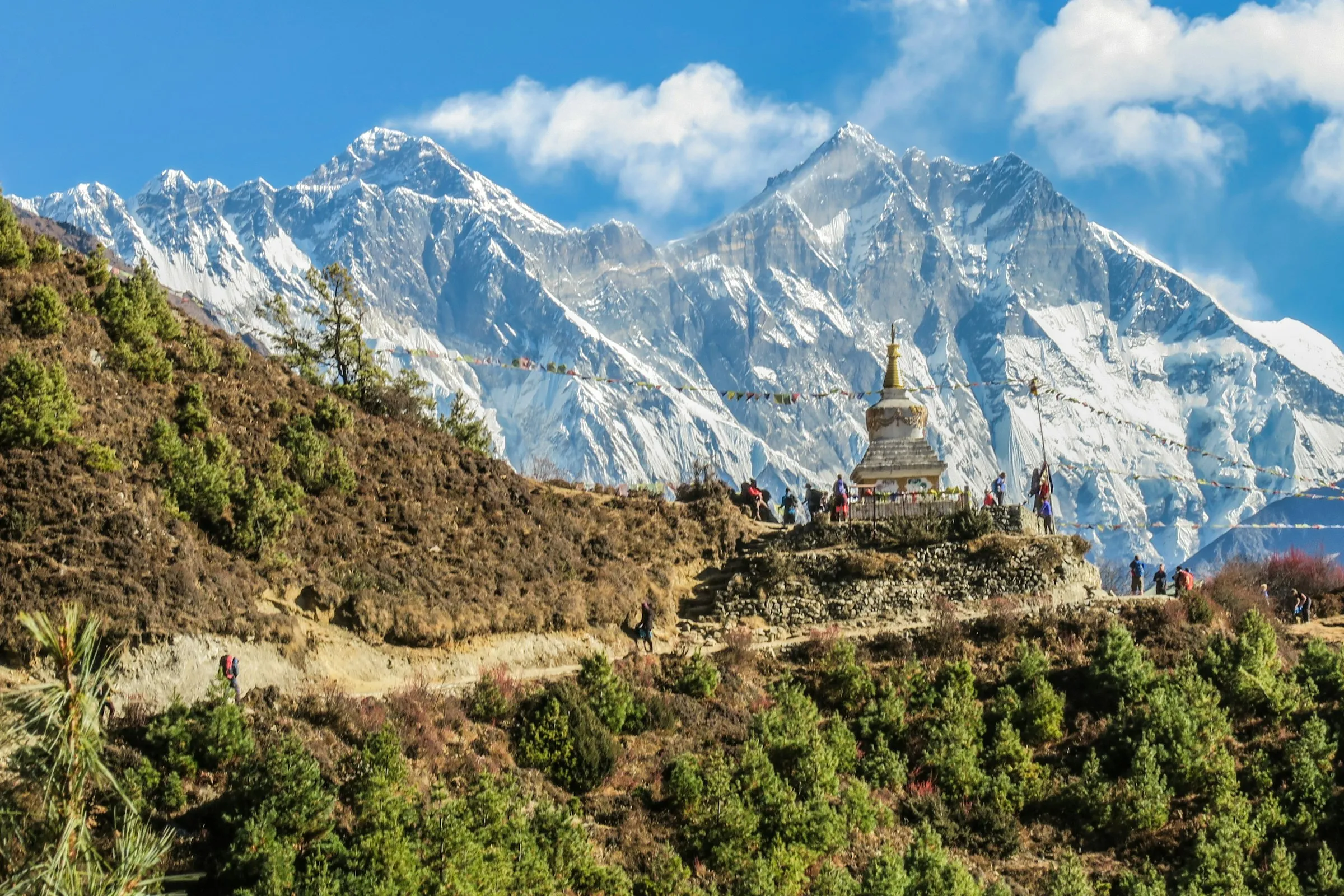
Best months: Mar–May, Oct–Nov. In those months the coldest average night on this trek is −14 °C, at Gorak Shep (5,164 m), the highest place you sleep.
Lukla (2,860 m)
| Month | Avg high | Avg low |
|---|---|---|
| January | +6 °C | −4 °C |
| February | +8 °C | −3 °C |
| March | +11 °C | 0 °C |
| April | +14 °C | +5 °C |
| May | +15 °C | +7 °C |
| June | +17 °C | +11 °C |
| July | +17 °C | +13 °C |
| August | +17 °C | +13 °C |
| September | +16 °C | +11 °C |
| October | +14 °C | +7 °C |
| November | +11 °C | +3 °C |
| December | +9 °C | 0 °C |
Namche Bazaar (3,440 m)
| Month | Avg high | Avg low |
|---|---|---|
| January | +4 °C | −5 °C |
| February | +5 °C | −5 °C |
| March | +8 °C | −2 °C |
| April | +11 °C | +2 °C |
| May | +12 °C | +5 °C |
| June | +15 °C | +10 °C |
| July | +16 °C | +12 °C |
| August | +16 °C | +11 °C |
| September | +14 °C | +10 °C |
| October | +11 °C | +5 °C |
| November | +9 °C | +1 °C |
| December | +7 °C | −2 °C |
Dingboche (4,410 m)
| Month | Avg high | Avg low |
|---|---|---|
| January | −3 °C | −12 °C |
| February | −2 °C | −11 °C |
| March | +1 °C | −9 °C |
| April | +4 °C | −5 °C |
| May | +6 °C | −1 °C |
| June | +10 °C | +4 °C |
| July | +10 °C | +6 °C |
| August | +10 °C | +6 °C |
| September | +9 °C | +4 °C |
| October | +5 °C | −1 °C |
| November | +3 °C | −6 °C |
| December | 0 °C | −9 °C |
Gorak Shep (5,164 m)
| Month | Avg high | Avg low |
|---|---|---|
| January | −9 °C | −17 °C |
| February | −8 °C | −17 °C |
| March | −6 °C | −14 °C |
| April | −2 °C | −10 °C |
| May | +1 °C | −5 °C |
| June | +5 °C | 0 °C |
| July | +6 °C | +2 °C |
| August | +6 °C | +2 °C |
| September | +5 °C | 0 °C |
| October | 0 °C | −6 °C |
| November | −3 °C | −11 °C |
| December | −5 °C | −14 °C |
Modelled 10-year averages (ERA5 / ERA5-Land via Open-Meteo), checked against the Pyramid research station in the Khumbu, 2016-2025. Model averages, not station readings. How we made them.
How to read these numbers
Gorak Shep (5,164 m) is your highest and coldest night: the average low there is about −14 °C in March and −6 °C in October. These are averages, so a single day can be much colder, especially at night and in the wind. Each 1,000 m you climb is roughly 6 °C colder.
The seasons
- Spring (March to May): warming days, rhododendrons in bloom lower down, haze building towards May.
- Monsoon (June to September): most of the year’s rain, cloud hiding the peaks, and frequent Lukla flight delays.
- Autumn (late September to November): the clearest skies and the busiest trails.
- Winter (December to February): dry and clear, quiet trails, and well below freezing at night up high.
Related reading
- SIM cards, Wi-Fi and charging on a Nepal trek · Which SIM to buy in Kathmandu, where phones lose signal on the Everest and Annapurna trails, teahouse Wi-Fi an…
- Nepal visa on arrival for trekkers: fees, the online form and how long you can stay · Nepal tourist visa costs for 15, 30 or 90 days, the online pre-arrival form, what to bring to the airport, and…
- Nepal trekking calendar 2027: seasons, festivals and the dates that affect your trek · The 2027 trekking seasons month by month, the festival dates that fill buses and lodges, when Lukla flights mo…
- Lukla flights from Ramechhap: how the Everest flight actually works · In peak season Lukla flights leave from Ramechhap, 4 to 5 hours from Kathmandu. What that means for your Evere…
- An eight-week training plan for Everest Base Camp · A simple eight-week plan to get ready for Everest Base Camp, built around long walks with a pack and back-to-b…
- How many days do you need for Everest Base Camp? · Why our Everest Base Camp trek takes 12 days, what 10-day itineraries cut, what a 14-day version adds, and how…