You will have signal more often than you expect and less often than you want. Plan for both.
Buy a SIM at the airport or in Thamel
Nepal has two networks that matter: Nepal Telecom (NTC) and Ncell. Both sell tourist SIMs with your passport and a photo. In 2026, operator guides put a SIM at about NPR 90 to 110 and tourist data packs from roughly NPR 300 for 3 GB to NPR 600 for 7 GB, with larger bundles up to NPR 2,000 for 28 days (Mountain Kick, 2026; Nepal Database, 2026). Prices change often; the counter at Kathmandu airport will have the current list.
Which network? The common advice is NTC for the mountains and Ncell for cities. Coverage on each trail is patchy either way, and it depends on which operator built the tower in each valley. If two of you are travelling, take one of each.
Where you will and will not have signal
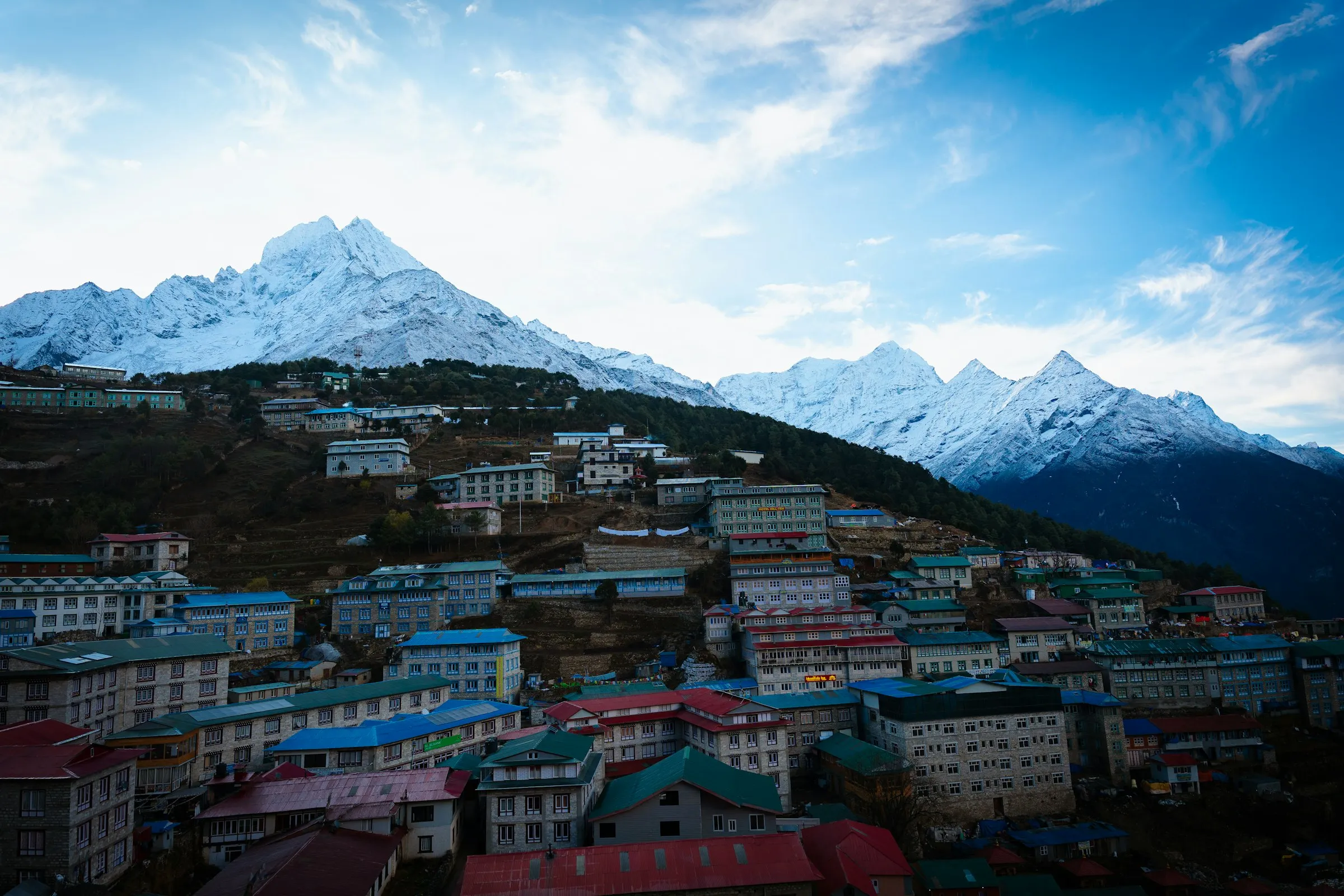
- Everest: signal in Lukla, Phakding and Namche; patchy from Tengboche up; weak or none around Lobuche and Gorak Shep. The Khumbu has its own Wi-Fi network, Everest Link, sold as prepaid cards (Wikipedia: Everest Link). Operator guides in 2026 quoted cards at about US$20 for 10 GB over 30 days (Best Heritage Tour).
- Annapurna Base Camp: signal in Ghandruk and Chhomrong, then little or nothing from Bamboo to base camp.
- Annapurna Circuit: signal in the villages along the road, in Manang, and again at Muktinath and Jomsom; nothing on the pass.
- Langtang: signal in Syabrubesi, patchy up the valley, some at Kyanjin Gompa.
Treat all of this as “sometimes”. Tell people at home that silence for two or three days is normal.
Teahouse Wi-Fi and charging
Teahouses sell Wi-Fi by the day and charging by the device or the hour, and both get dearer the higher you go because electricity comes from small hydro or solar. Operator guides in 2026 quoted Wi-Fi at roughly NPR 200 to 500 a day in Namche rising to NPR 500 to 800 at Lobuche, and charging at NPR 100 to 500 per device depending on altitude (Trek Pathways, 2026; Places Nepal). Rooms rarely have sockets above the first villages; charging happens in the dining room.
How to carry enough power
- A 20,000 mAh power bank charged in Kathmandu covers a phone for the whole Everest trek if the phone stays on flight mode between villages. Two people, two banks.
- Keep batteries warm at night. Cold drains them. Phone and power bank go in the sleeping bag.
- Download before you go: offline maps, music, books, and the trek’s day-by-day altitude page for reference.
- Charge when it is cheap. Namche and Chhomrong are the last places charging costs little; fill everything there.
- A small solar panel is usually not worth the weight on a teahouse trek. Charging at a lodge for a few hundred rupees is simpler.
Emergencies
Your guide carries a phone and knows where the signal is on each stretch. For a medical emergency, rescue is coordinated by phone from the nearest village with coverage, which is one reason we never leave a group spread across a trail. Make sure your insurance has a 24-hour number and that your guide has a copy of your policy.
Checked 25 October 2026. Prices quoted here are from operator guides, not our own receipts; we replace them with what we actually paid after each trip.