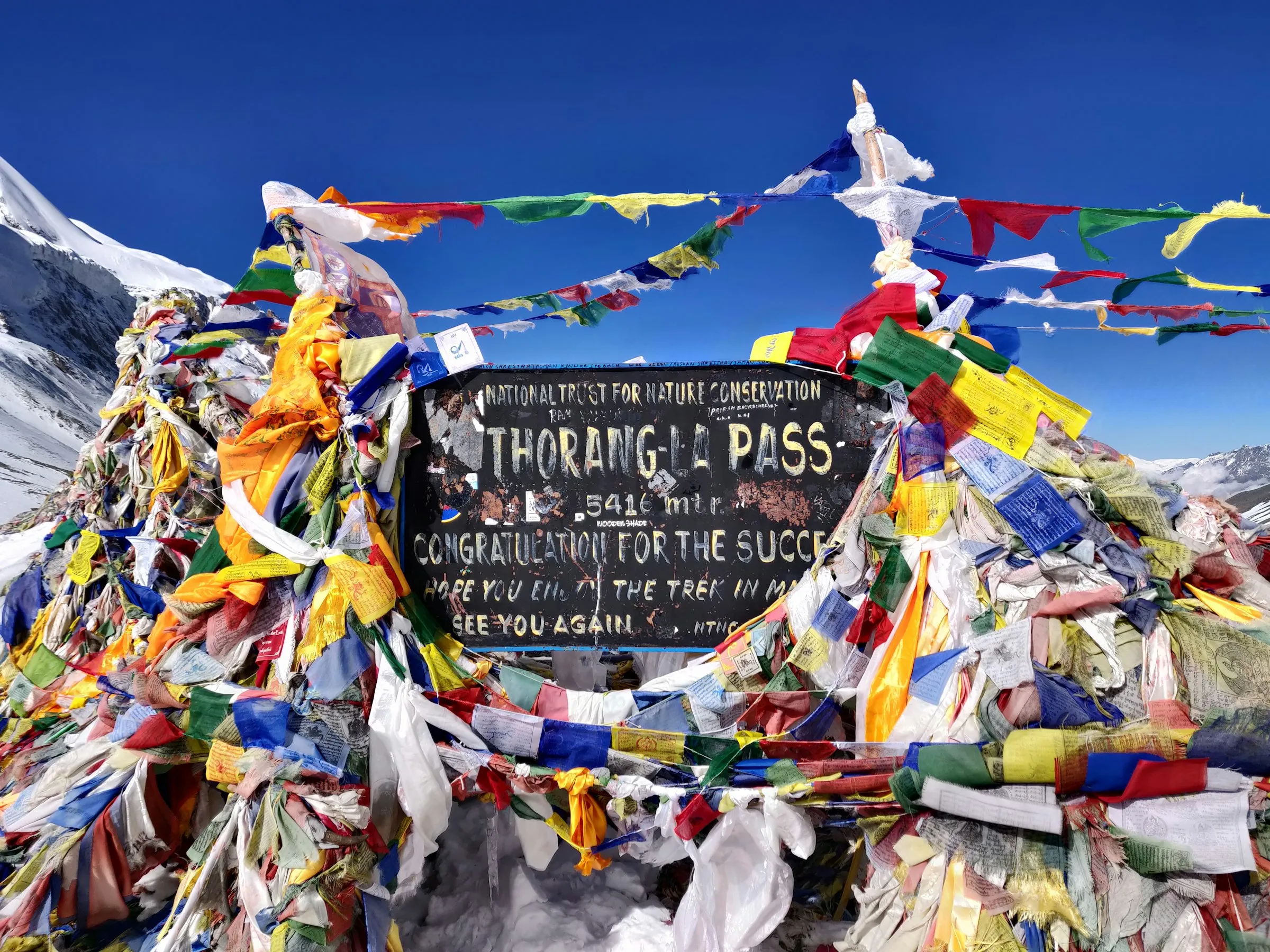
Best months: Mar–May, Oct–Nov. In those months the coldest average night on this trek is −13 °C, at Thorong Phedi (4,450 m), the highest place you sleep.
Besisahar (760 m)
| Month | Avg high | Avg low |
|---|---|---|
| January | +17 °C | +9 °C |
| February | +19 °C | +11 °C |
| March | +23 °C | +12 °C |
| April | +26 °C | +15 °C |
| May | +26 °C | +19 °C |
| June | +27 °C | +22 °C |
| July | +27 °C | +23 °C |
| August | +27 °C | +23 °C |
| September | +26 °C | +22 °C |
| October | +25 °C | +18 °C |
| November | +21 °C | +14 °C |
| December | +18 °C | +11 °C |
Manang (3,540 m)
| Month | Avg high | Avg low |
|---|---|---|
| January | +2 °C | −6 °C |
| February | +3 °C | −5 °C |
| March | +5 °C | −3 °C |
| April | +10 °C | +1 °C |
| May | +12 °C | +5 °C |
| June | +17 °C | +10 °C |
| July | +18 °C | +13 °C |
| August | +18 °C | +13 °C |
| September | +16 °C | +10 °C |
| October | +12 °C | +4 °C |
| November | +9 °C | 0 °C |
| December | +5 °C | −3 °C |
Thorong Phedi (4,450 m)
| Month | Avg high | Avg low |
|---|---|---|
| January | −6 °C | −16 °C |
| February | −5 °C | −15 °C |
| March | −3 °C | −13 °C |
| April | +2 °C | −9 °C |
| May | +5 °C | −4 °C |
| June | +9 °C | +2 °C |
| July | +11 °C | +5 °C |
| August | +10 °C | +5 °C |
| September | +8 °C | +2 °C |
| October | +4 °C | −4 °C |
| November | +1 °C | −9 °C |
| December | −3 °C | −13 °C |
Muktinath (3,760 m)
| Month | Avg high | Avg low |
|---|---|---|
| January | −1 °C | −12 °C |
| February | 0 °C | −12 °C |
| March | +2 °C | −10 °C |
| April | +6 °C | −5 °C |
| May | +10 °C | 0 °C |
| June | +14 °C | +6 °C |
| July | +14 °C | +8 °C |
| August | +14 °C | +8 °C |
| September | +12 °C | +5 °C |
| October | +9 °C | −1 °C |
| November | +6 °C | −5 °C |
| December | +2 °C | −9 °C |
Modelled 10-year averages (ERA5 / ERA5-Land via Open-Meteo), 2016-2025. Model averages, not station readings. How we made them.
How to read these numbers
In March the average night is about 12 °C at Besisahar and −13 °C at Thorong Phedi (4,450 m), where you sleep before the pass. The circuit crosses very different climates: warm and wet at Besisahar, and much drier beyond Manang, in the rain shadow of the Annapurnas.
The seasons
- Spring (March to May): warming days, flowers on the lower trail, and Thorong La usually open. Haze builds towards May.
- Monsoon (June to September): heavy rain and landslide risk lower down. The upper valleys around Manang and Mustang stay drier.
- Autumn (late September to November): the clearest skies and the most popular time to cross Thorong La.
- Winter (December to February): very cold at the top, and snow can close the pass for days. Lodges near the pass may close.
Related reading
- SIM cards, Wi-Fi and charging on a Nepal trek · Which SIM to buy in Kathmandu, where phones lose signal on the Everest and Annapurna trails, teahouse Wi-Fi an…
- Nepal visa on arrival for trekkers: fees, the online form and how long you can stay · Nepal tourist visa costs for 15, 30 or 90 days, the online pre-arrival form, what to bring to the airport, and…
- Nepal trekking calendar 2027: seasons, festivals and the dates that affect your trek · The 2027 trekking seasons month by month, the festival dates that fill buses and lodges, when Lukla flights mo…
- An eight-week training plan for Everest Base Camp · A simple eight-week plan to get ready for Everest Base Camp, built around long walks with a pack and back-to-b…
- Is the Annapurna Circuit still worth it with the road? · Where the jeep road now runs on the Annapurna Circuit, which days it affects, how our itinerary avoids it, and…
- Trekking in Nepal in January and February: what works · Can you trek in Nepal in January or February? Night temperatures on six treks, which treks list February as po…