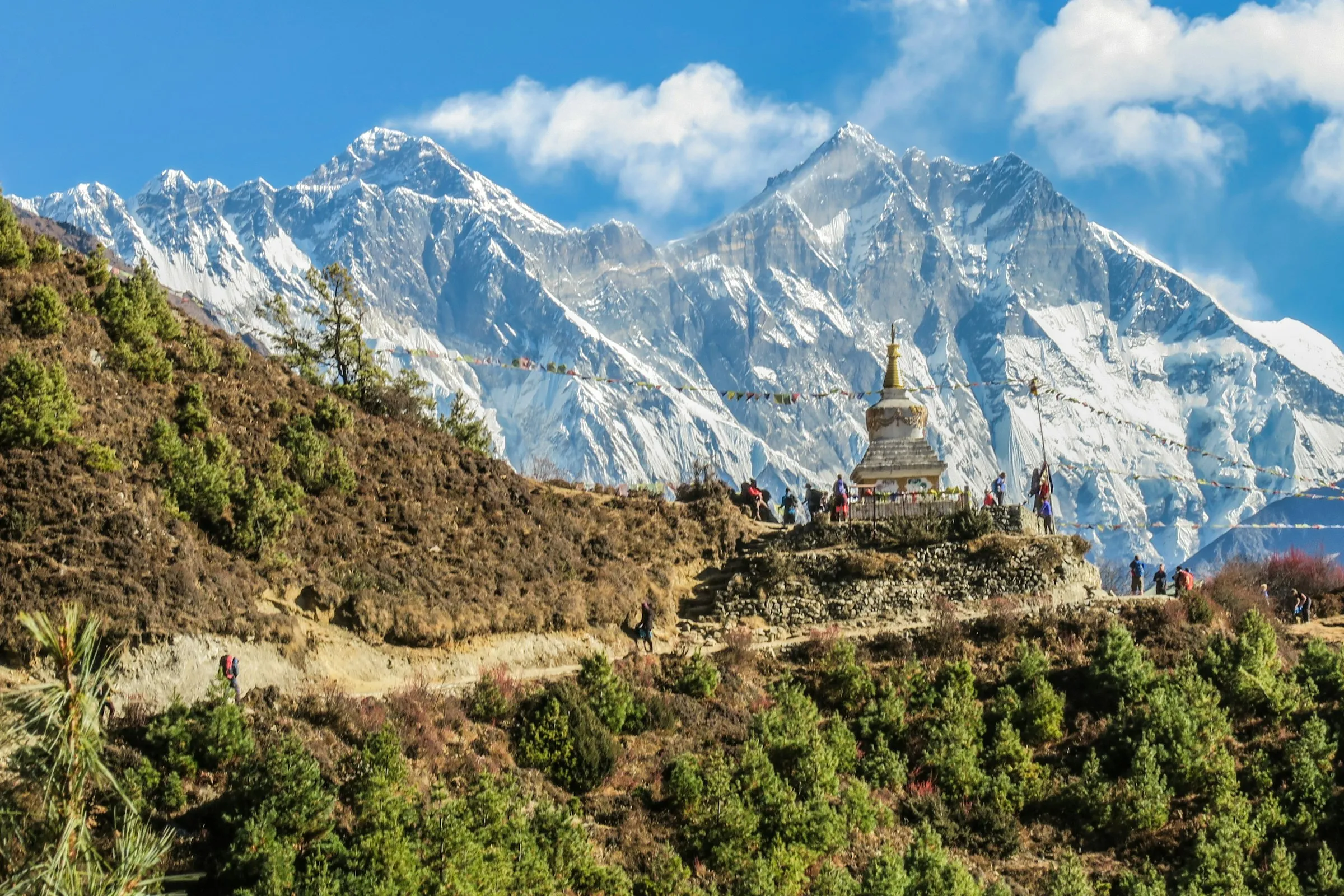
June is outside the trekking seasons for the Everest Base Camp trek. The best months are Mar–May, Oct–Nov. The average night low at Gorak Shep (5,164 m), the highest place you sleep, is 0 °C; days at Lukla (2,860 m) reach about 17 °C.
June along the trail
| Place | Elevation | Avg high | Avg low |
|---|---|---|---|
| Lukla | 2,860 m | +17 °C | +11 °C |
| Namche Bazaar | 3,440 m | +15 °C | +10 °C |
| Dingboche | 4,410 m | +10 °C | +4 °C |
| Gorak Shep | 5,164 m | +5 °C | 0 °C |
Modelled 10-year averages (ERA5 / ERA5-Land via Open-Meteo), checked against the Pyramid research station in the Khumbu, 2016-2025. Model averages, not station readings. How we made them.
What June is like
Monsoon season (June to September). Most of the year's rain, cloud hiding the peaks, leeches in the lower forests and frequent delays on mountain flights.
- Sleeping bag: comfort rating about −5 °C or lower for the 0 °C nights at Gorak Shep.
- Crowds: 5.1% of the year's Western visitors arrive in June (Nepal Tourism Board, 2025 arrivals), so trails and lodges are quiet.
- Better months: Mar–May, Oct–Nov. See when to go for every trek by month, or compare treks that suit June better.
Questions about June
How cold is the Everest Base Camp trek in June?
Nights at Gorak Shep (5,164 m) average 0 °C in June, and days at Lukla reach about 17 °C. These are 10-year averages from a weather model; real nights can be colder.
Is June a good time for the Everest Base Camp trek?
We don't recommend it. June is monsoon season: Most of the year's rain, cloud hiding the peaks, leeches in the lower forests and frequent delays on mountain flights. The best months are Mar–May, Oct–Nov.
What sleeping bag do I need for Everest Base Camp in June?
Teahouse rooms are unheated. For an average night of 0 °C at Gorak Shep, look for a comfort rating of about −5 °C or lower.
Temperatures are 10-year averages (2016–2025) from the ERA5 weather model via Open-Meteo, at the nearest model point to each stop. Real conditions vary year to year; we don't publish modelled rainfall because the model is unreliable for it in the mountains.