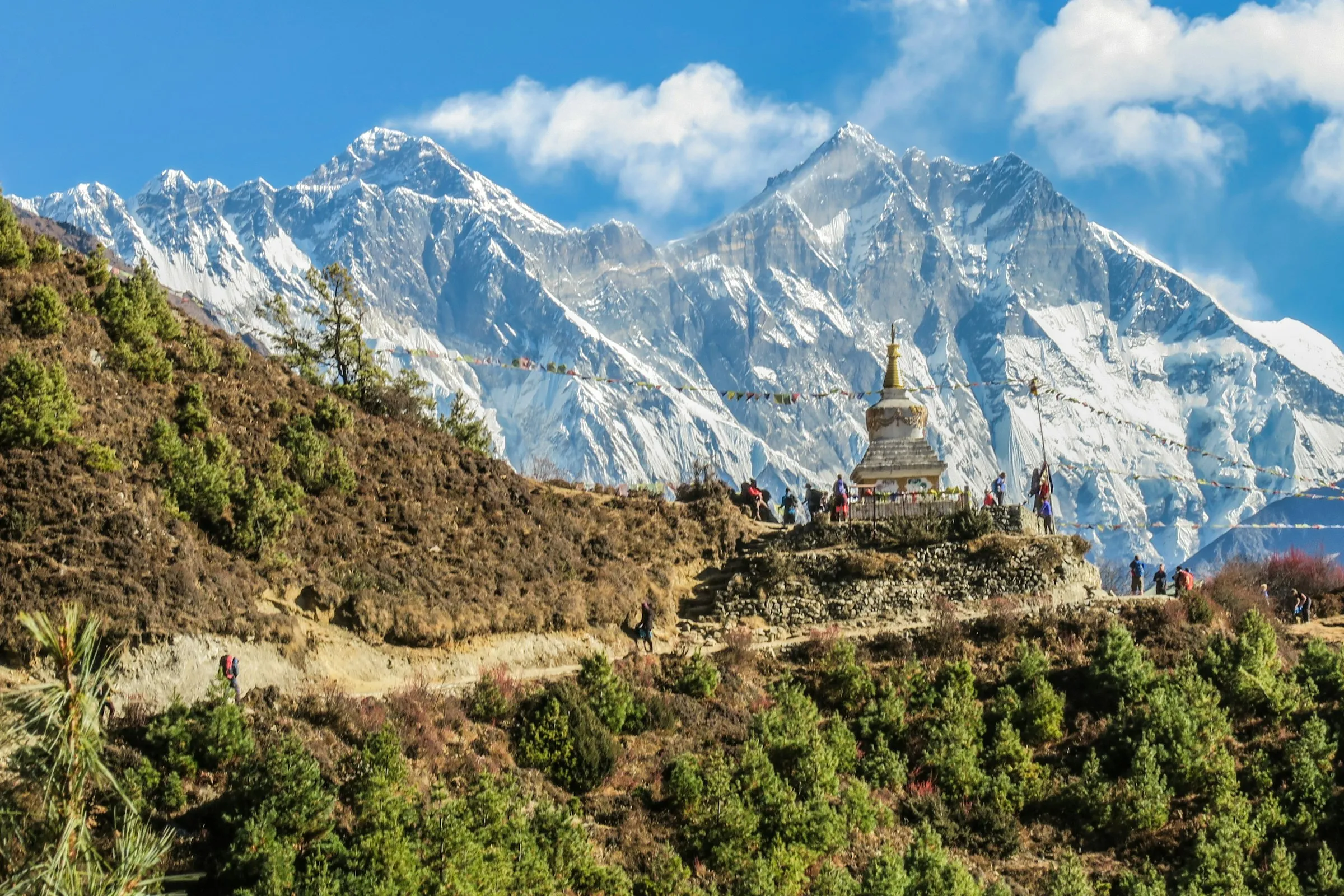
January is outside the trekking seasons for the Everest Base Camp trek. The best months are Mar–May, Oct–Nov. The average night low at Gorak Shep (5,164 m), the highest place you sleep, is −17 °C; days at Lukla (2,860 m) reach about 6 °C.
January along the trail
| Place | Elevation | Avg high | Avg low |
|---|---|---|---|
| Lukla | 2,860 m | +6 °C | −4 °C |
| Namche Bazaar | 3,440 m | +4 °C | −5 °C |
| Dingboche | 4,410 m | −3 °C | −12 °C |
| Gorak Shep | 5,164 m | −9 °C | −17 °C |
Modelled 10-year averages (ERA5 / ERA5-Land via Open-Meteo), checked against the Pyramid research station in the Khumbu, 2016-2025. Model averages, not station readings. How we made them.
What January is like
Winter season (December to February). Dry and often clear, with quiet trails. Nights at the highest stops are far below freezing and some lodges close.
- Sleeping bag: comfort rating about −22 °C or lower for the −17 °C nights at Gorak Shep.
- Better months: Mar–May, Oct–Nov. See when to go for every trek by month, or compare treks that suit January better.
Questions about January
How cold is the Everest Base Camp trek in January?
Nights at Gorak Shep (5,164 m) average −17 °C in January, and days at Lukla reach about 6 °C. These are 10-year averages from a weather model; real nights can be colder.
Is January a good time for the Everest Base Camp trek?
We don't recommend it. January is winter season: Dry and often clear, with quiet trails. Nights at the highest stops are far below freezing and some lodges close. The best months are Mar–May, Oct–Nov.
What sleeping bag do I need for Everest Base Camp in January?
Teahouse rooms are unheated. For an average night of −17 °C at Gorak Shep, look for a comfort rating of about −22 °C or lower.
Temperatures are 10-year averages (2016–2025) from the ERA5 weather model via Open-Meteo, at the nearest model point to each stop. Real conditions vary year to year; we don't publish modelled rainfall because the model is unreliable for it in the mountains.