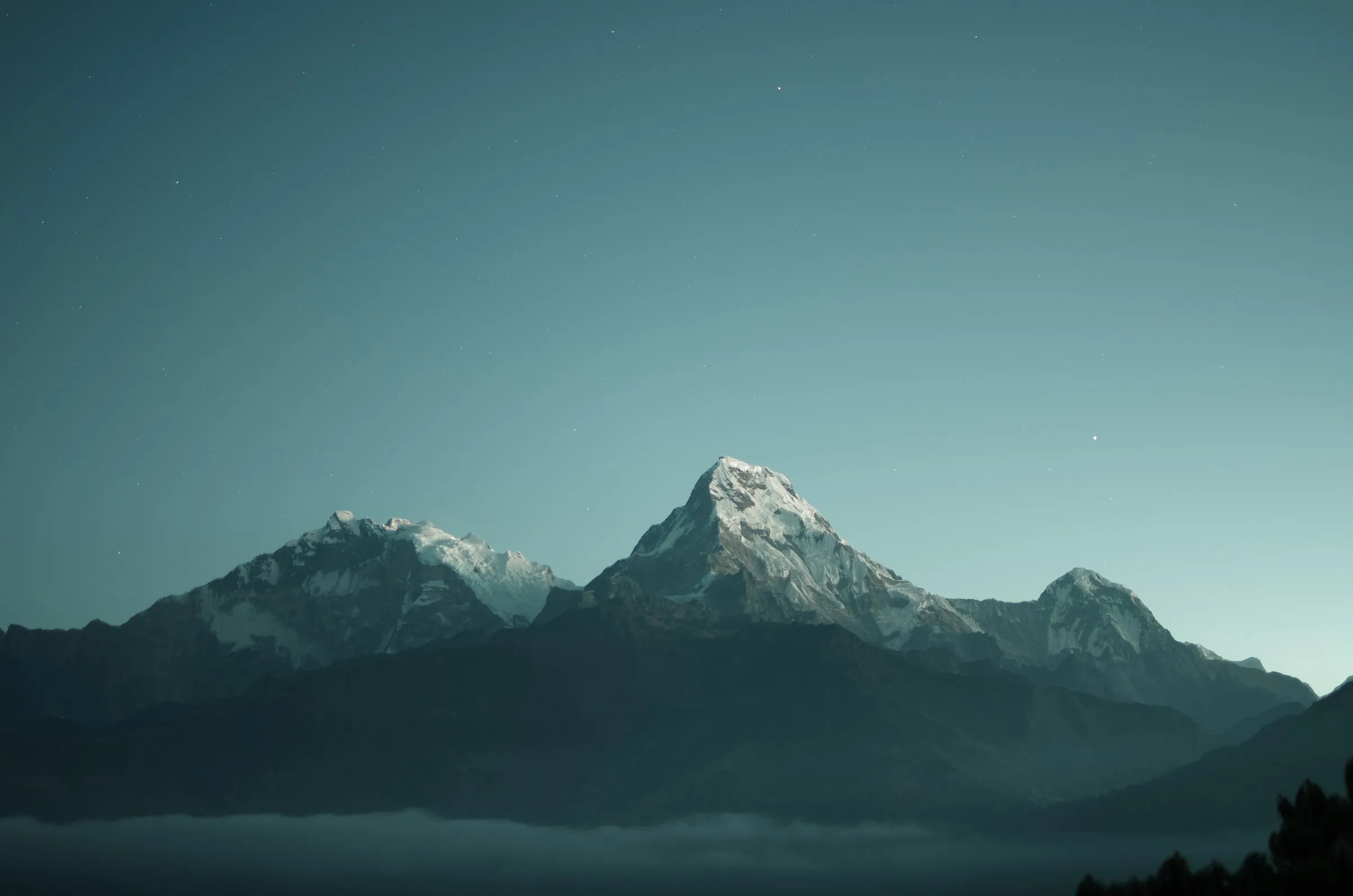
April is one of the best months for the Poon Hill trek. The average night low at Ghorepani (2,860 m), the highest place you sleep, is 1 °C; days at Ghandruk (1,940 m) reach about 19 °C.
April along the trail
| Place | Elevation | Avg high | Avg low |
|---|---|---|---|
| Ghorepani | 2,860 m | +13 °C | +1 °C |
| Ghandruk | 1,940 m | +19 °C | +6 °C |
Modelled 10-year averages (ERA5 / ERA5-Land via Open-Meteo), 2016-2025. Model averages, not station readings. How we made them.
What April is like
Spring season (March to May). Warming days and rhododendrons in bloom lower down. Haze builds towards May, and the first pre-monsoon showers arrive late in the season.
- Sleeping bag: comfort rating about −4 °C or lower for the 1 °C nights at Ghorepani.
- Crowds: 12% of the year's Western visitors arrive in April (Nepal Tourism Board, 2025 arrivals), so book teahouses at the top early.
The rhododendron month
Poon Hill is famous for its rhododendron forests, and April is when they flower. The trail between Ghorepani and Tadapani turns red, pink and white, and it’s the main reason many people choose spring for this trek.
What to expect
- Warm days and mild nights at Ghorepani.
- Spring haze. Sunrise views from Poon Hill can be softer than in autumn; the clearest mornings are often after rain.
- Busy around Ghorepani at weekends and holidays, when domestic trekkers join.
Questions about April
How cold is the Poon Hill trek in April?
Nights at Ghorepani (2,860 m) average 1 °C in April, and days at Ghandruk reach about 19 °C. These are 10-year averages from a weather model; real nights can be colder.
Is April a good time for the Poon Hill trek?
Yes. April is one of the best months, with spring conditions: Warming days and rhododendrons in bloom lower down. Haze builds towards May, and the first pre-monsoon showers arrive late in the season.
What sleeping bag do I need for Poon Hill in April?
Teahouse rooms are unheated. For an average night of 1 °C at Ghorepani, look for a comfort rating of about −4 °C or lower.
Temperatures are 10-year averages (2016–2025) from the ERA5 weather model via Open-Meteo, at the nearest model point to each stop. Real conditions vary year to year; we don't publish modelled rainfall because the model is unreliable for it in the mountains.