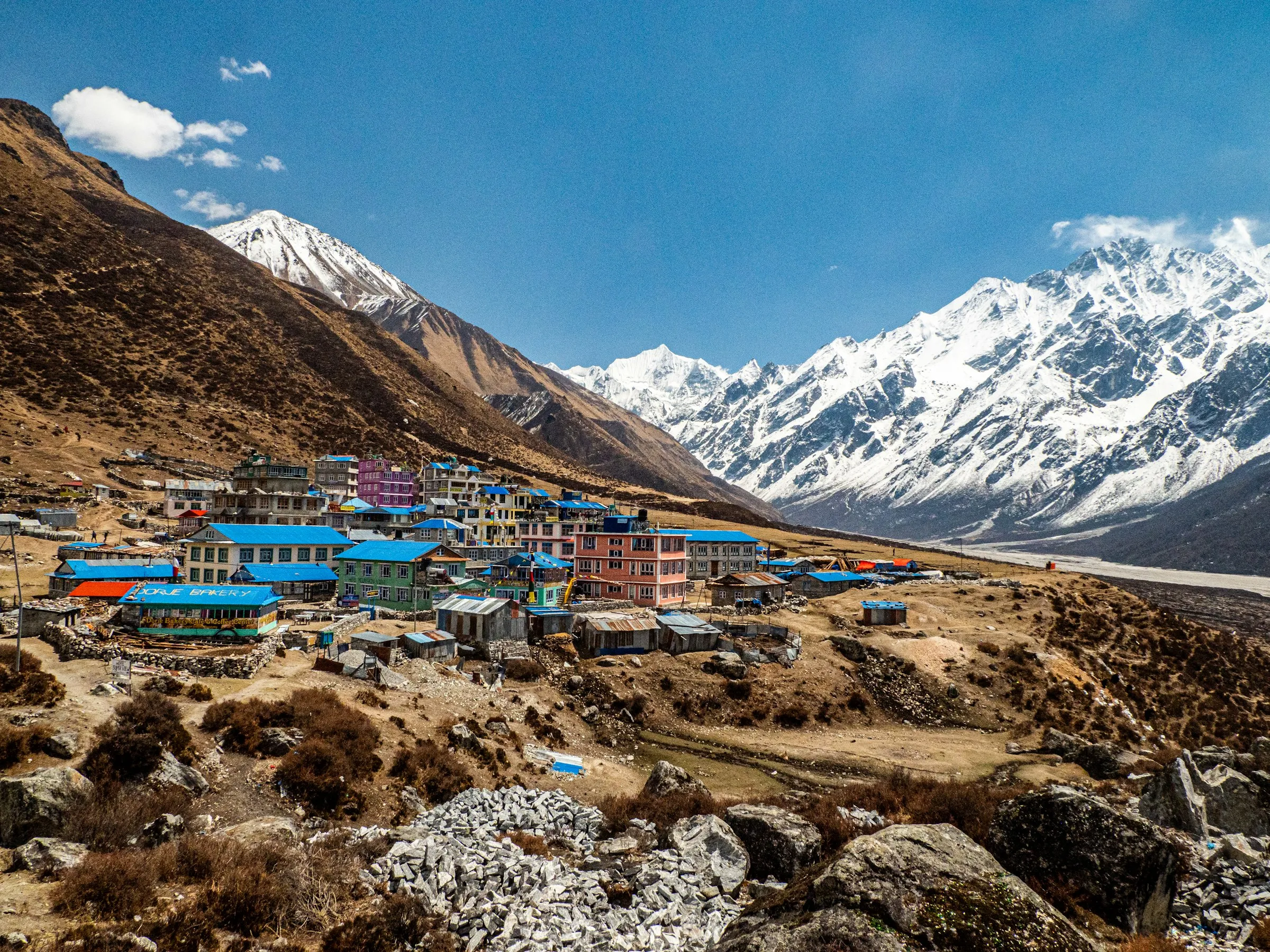
April is one of the best months for the Langtang Valley trek. The average night low at Kyanjin Gompa (3,870 m), the highest place you sleep, is −4 °C; days at Syabrubesi (1,460 m) reach about 21 °C.
April along the trail
| Place | Elevation | Avg high | Avg low |
|---|---|---|---|
| Syabrubesi | 1,460 m | +21 °C | +9 °C |
| Langtang village | 3,430 m | +9 °C | −2 °C |
| Kyanjin Gompa | 3,870 m | +6 °C | −4 °C |
Modelled 10-year averages (ERA5 / ERA5-Land via Open-Meteo), 2016-2025. Model averages, not station readings. How we made them.
What April is like
Spring season (March to May). Warming days and rhododendrons in bloom lower down. Haze builds towards May, and the first pre-monsoon showers arrive late in the season.
- Sleeping bag: comfort rating about −9 °C or lower for the −4 °C nights at Kyanjin Gompa.
- Crowds: 12% of the year's Western visitors arrive in April (Nepal Tourism Board, 2025 arrivals), so book teahouses at the top early.
Spring in the valley
April brings flowering rhododendrons to the lower forest between Syabrubesi and Lama Hotel, and warmer days higher up the valley.
What to expect
- Milder nights at Kyanjin Gompa than earlier in spring, as the table above shows.
- Clear mornings, cloudy afternoons. Climb Kyanjin Ri early for the best view of the glaciers.
- Quieter than the big treks. Langtang sees far fewer trekkers than Everest or Annapurna Base Camp.
Questions about April
How cold is the Langtang Valley trek in April?
Nights at Kyanjin Gompa (3,870 m) average −4 °C in April, and days at Syabrubesi reach about 21 °C. These are 10-year averages from a weather model; real nights can be colder.
Is April a good time for the Langtang Valley trek?
Yes. April is one of the best months, with spring conditions: Warming days and rhododendrons in bloom lower down. Haze builds towards May, and the first pre-monsoon showers arrive late in the season.
What sleeping bag do I need for Langtang Valley in April?
Teahouse rooms are unheated. For an average night of −4 °C at Kyanjin Gompa, look for a comfort rating of about −9 °C or lower.
Temperatures are 10-year averages (2016–2025) from the ERA5 weather model via Open-Meteo, at the nearest model point to each stop. Real conditions vary year to year; we don't publish modelled rainfall because the model is unreliable for it in the mountains.