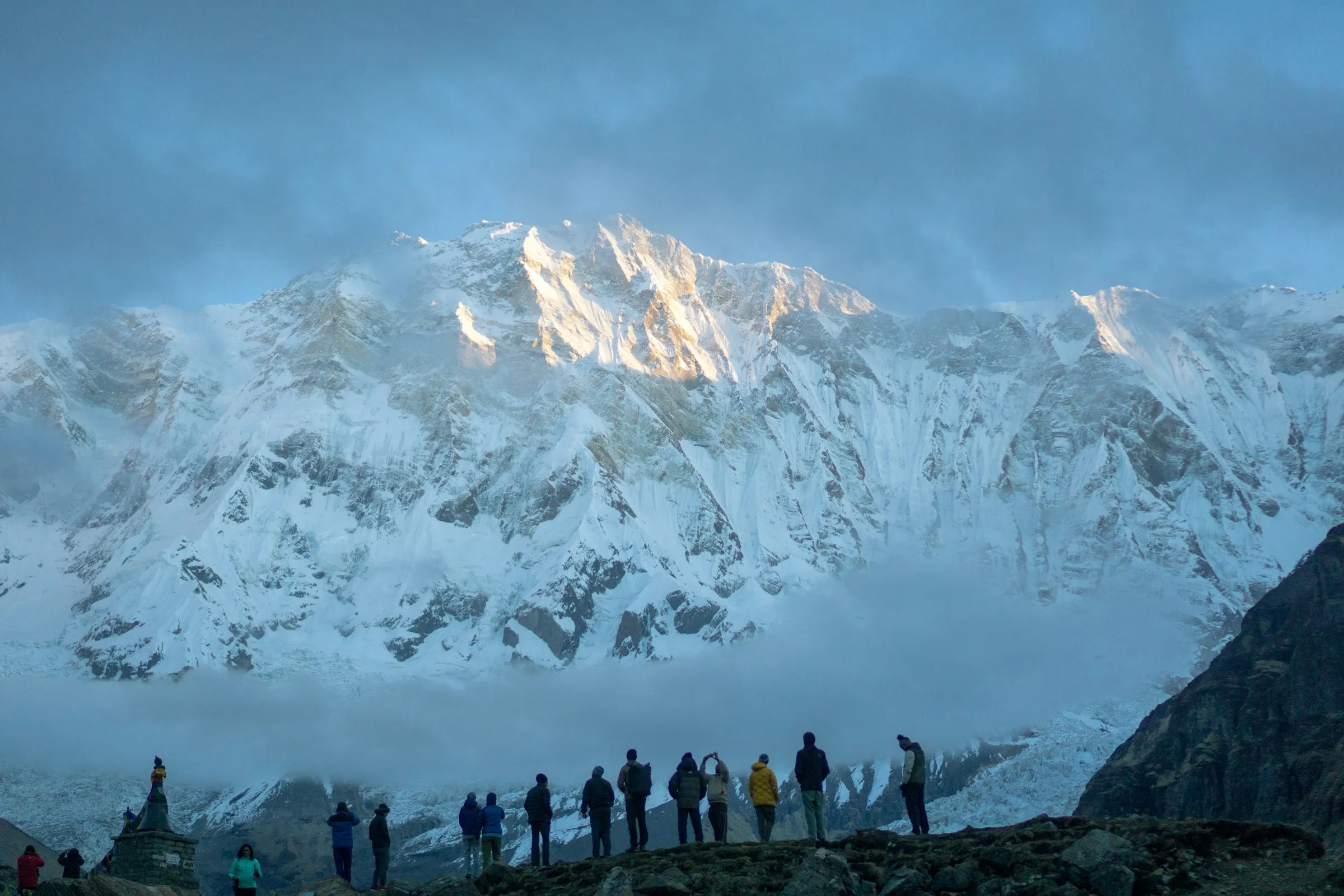
August is outside the trekking seasons for the Annapurna Base Camp trek. The best months are Mar–May, Oct–Nov. The average night low at Annapurna Base Camp (4,130 m), the highest place you sleep, is 7 °C; days at Ghandruk (1,940 m) reach about 20 °C.
August along the trail
| Place | Elevation | Avg high | Avg low |
|---|---|---|---|
| Ghandruk | 1,940 m | +20 °C | +16 °C |
| Deurali | 3,230 m | +14 °C | +9 °C |
| Annapurna Base Camp | 4,130 m | +12 °C | +7 °C |
Modelled 10-year averages (ERA5 / ERA5-Land via Open-Meteo), 2016-2025. Model averages, not station readings. How we made them.
What August is like
Monsoon season (June to September). Most of the year's rain, cloud hiding the peaks, leeches in the lower forests and frequent delays on mountain flights.
- Sleeping bag: comfort rating about 2 °C or lower for the 7 °C nights at Annapurna Base Camp.
- Crowds: 5% of the year's Western visitors arrive in August (Nepal Tourism Board, 2025 arrivals), so trails and lodges are quiet.
- Better months: Mar–May, Oct–Nov. See when to go for every trek by month, or compare treks that suit August better.
Questions about August
How cold is the Annapurna Base Camp trek in August?
Nights at Annapurna Base Camp (4,130 m) average 7 °C in August, and days at Ghandruk reach about 20 °C. These are 10-year averages from a weather model; real nights can be colder.
Is August a good time for the Annapurna Base Camp trek?
We don't recommend it. August is monsoon season: Most of the year's rain, cloud hiding the peaks, leeches in the lower forests and frequent delays on mountain flights. The best months are Mar–May, Oct–Nov.
What sleeping bag do I need for Annapurna Base Camp in August?
Teahouse rooms are unheated. For an average night of 7 °C at Annapurna Base Camp, look for a comfort rating of about 2 °C or lower.
Temperatures are 10-year averages (2016–2025) from the ERA5 weather model via Open-Meteo, at the nearest model point to each stop. Real conditions vary year to year; we don't publish modelled rainfall because the model is unreliable for it in the mountains.