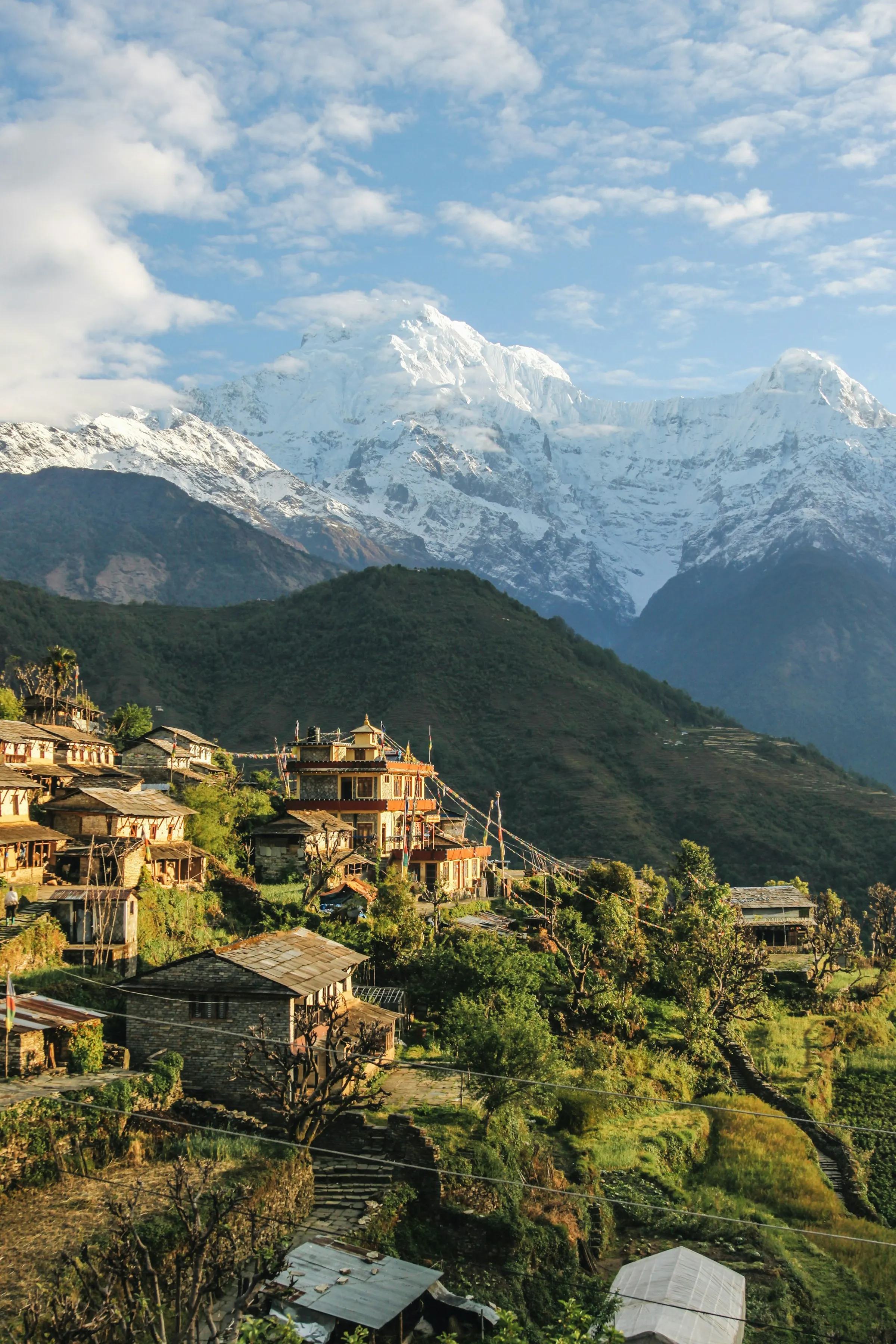
The monsoon runs roughly from June to September. It brings most of Nepal’s yearly rain, and it changes trekking a lot. The short answer: June to August isn’t a season we plan treks for, and September is possible on all of our treks as the rains ease.
What the monsoon means on the trail
- Cloud and rain hide the mountains. You may walk for days without seeing the peaks you came for.
- Leeches are common in the wet forests lower down.
- Landslides close roads and slow the drive to and from trailheads.
- Mountain flights, such as Lukla and Jomsom, are often delayed or cancelled.
- It’s warm. On our weather data, the average July night at Ghorepani (2,860 m) is about 12 °C, and even Gorak Shep near Everest Base Camp stays around 2 °C.
Where it’s drier
The upper Annapurna Circuit, from around Manang towards Thorong La, sits in a rain shadow behind the Annapurna range and is much drier than the green lower valley. The road in can still be cut by landslides, and you still need to get there through the wet section.
We don’t publish monthly rainfall figures on this site: the weather models we use are unreliable for rain in steep valleys and rain shadows, and we’d rather show nothing than show you wrong numbers.
Why September is different
The monsoon usually eases during September. On our calendars, September is a “possible” month on all of our treks: wetter and cloudier at the start, clearing towards October. If you have flexible dates, the later in September the better.
If you have to go in the monsoon
- Choose a route that doesn’t rely on mountain flights.
- Allow spare days for road and flight delays.
- Pack proper rain gear, a pack cover, and leech socks or salt for the lower forest.
- Keep expectations about views low, and enjoy the green valleys and quiet lodges.
See when to go for the best months on every trek.